本文主要是介绍程序员的浪漫,把这个玫瑰花代码送给你的那个他/她吧,希望对大家解决编程问题提供一定的参考价值,需要的开发者们随着小编来一起学习吧!
致读者: 博主是一名数据科学与大数据专业大二的学生,真正的一个互联网萌新,写博客一方面是为了记录自己的学习历程,一方面是希望能够帮助到很多和自己一样处于困惑的读者。由于水平有限,博客中难免会有一些错误,有纰漏之处恳请各位大佬不吝赐教!之后会写大数据专业的文章哦。尽管当前水平可能不及各位大佬,但我会尽我自己所能,做到最好☺。——天地有正气,杂然赋流形。下则为河岳,上则为日星。
记得刚刚学习C语言的时候,突然有一个天,我上了表白墙!!!第一次啊,作为一个计算机专业的学生,竟然有人发现我,然后我就去各个网站搜刮代码,终于!!!找到了适合程序员浪漫的表白代码!!!
当然本人也珍藏了多年,终于那拿出来压箱底的东西了😉。
学会了这些,女朋友岂不是“手到擒来”???
废话不多说,先观看效果!!
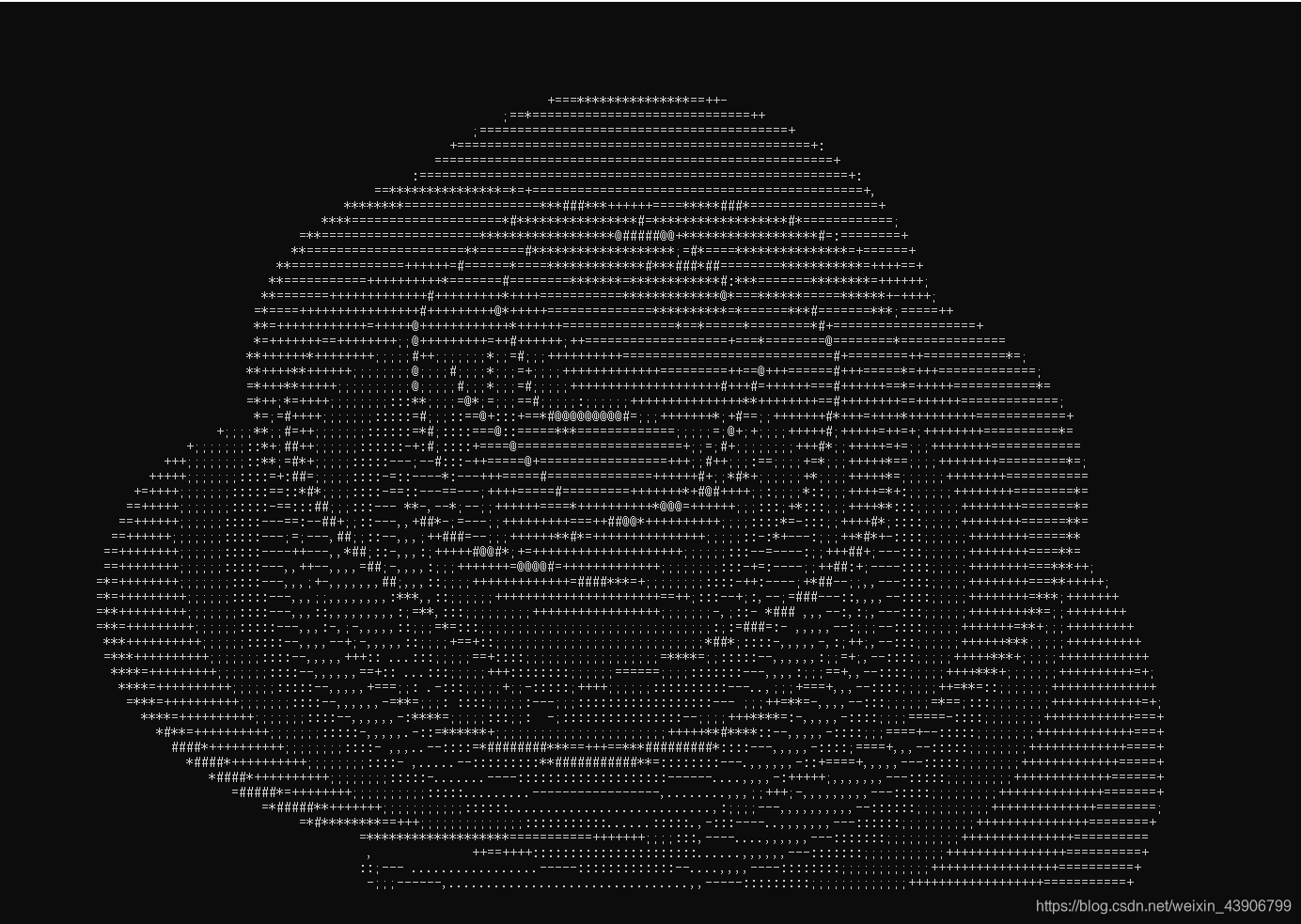
这么漂亮的玫瑰花,谁不喜欢??!!
赶紧拿走,晚了我就后悔了。😁
#include <stdio.h>
#include <math.h>const int max_iterations = 128;
const float stop_threshold = 0.01f;
const float grad_step = 0.01f;
const float clip_far = 10.0f;const float PI = 3.14159265359f;
const float PI2 = 6.28318530718f;
const float DEG_TO_RAD = PI / 180.0f;typedef struct { float x, y; } vec2;
typedef struct { float x, y, z; } vec3;
typedef struct { float m[9]; } mat3;const vec3 light_pos = { 20.0f, 50.0f, 20.0f };float min(float a, float b) { return a < b ? a : b; }
float max(float a, float b) { return a > b ? a : b; }
float clamp(float f, float a, float b) { return max(min(f, b), a); }
vec2 make2(float x, float y) { vec2 r = { x, y }; return r; }
vec2 add2(vec2 a, vec2 b) { vec2 r = { a.x + b.x, a.y + b.y }; return r; }
vec2 sub2(vec2 a, vec2 b) { vec2 r = { a.x - b.x, a.y - b.y }; return r; }
float dot2(vec2 a, vec2 b) { return a.x * b.x + a.y * b.y; }
float length2(vec2 v) { return sqrt(dot2(v, v)); }
vec3 make3(float x, float y, float z) { vec3 r = { x, y, z }; return r; }
vec3 add3(vec3 a, vec3 b) { vec3 r = { a.x + b.x, a.y + b.y, a.z + b.z }; return r; }
vec3 sub3(vec3 a, vec3 b) { vec3 r = { a.x - b.x, a.y - b.y, a.z - b.z }; return r; }
vec3 mul3(vec3 a, vec3 b) { vec3 r = { a.x * b.x, a.y * b.y, a.z * b.z }; return r; }
vec3 scale3(vec3 v, float s) { vec3 r = { v.x * s, v.y * s, v.z *s }; return r; }
float dot3(vec3 a, vec3 b) { return a.x * b.x + a.y * b.y + a.z * b.z; }
float length3(vec3 v) { return sqrt(dot3(v, v)); }
vec3 normalize3(vec3 v) { return scale3(v, 1.0f / length3(v)); }
vec3 mul(mat3 m, vec3 v) {return make3(m.m[0] * v.x + m.m[3] * v.y + m.m[6] * v.z,m.m[1] * v.x + m.m[4] * v.y + m.m[7] * v.z,m.m[2] * v.x + m.m[5] * v.y + m.m[8] * v.z);
}mat3 rotationXY(float x, float y) {vec2 c = { cos(x), cos(y) }, s = { sin(x), sin(y) };mat3 m = {c.y      , 0.0f, -s.y,s.y * s.x,  c.x,  c.y * s.x,s.y * c.x, -s.x,  c.y * c.x};return m;
}float opI(float d1, float d2) { return max(d1, d2); }
float opU(float d1, float d2) { return min(d1, d2); }
float opS(float d1, float d2) { return max(-d1, d2); }float sdPetal(vec3 p, float s) {p = add3(mul3(p, make3(0.8f, 1.5f, 0.8f)), make3(0.1f, 0.0f, 0.0f));vec2 q = make2(length2(make2(p.x, p.z)), p.y);float lower = length2(q) - 1.0f;lower = opS(length2(q) - 0.97f, lower);lower = opI(lower, q.y);float upper = length2(sub2(q, make2(s, 0.0f))) + 1.0f - s;upper = opS(upper, length2(sub2(q, make2(s, 0.0f))) + 0.97f - s);upper = opI(upper, -q.y);upper = opI(upper, q.x - 2.0f);float region = length3(sub3(p, make3(1.0f, 0.0f, 0.0f))) - 1.0f;return opI(opU(upper, lower), region);
}float map(vec3 p) {float d = 1000.0f, s = 2.0f;mat3 r = rotationXY(0.1f, PI2 * 0.618034f);r.m[0] *= 1.08f;  r.m[1] *= 1.08f;  r.m[2] *= 1.08f;r.m[3] *= 0.995f; r.m[4] *= 0.995f; r.m[5] *= 0.995f;r.m[6] *= 1.08f;  r.m[7] *= 1.08f;  r.m[8] *= 1.08f;for (int i = 0; i < 21; i++) {d = opU(d, sdPetal(p, s));p = mul(r, p);p = add3(p, make3(0.0, -0.02, 0.0));s *= 1.05f;}return d;
}vec3 gradient(vec3 pos) {const vec3 dx = { grad_step, 0.0, 0.0 };const vec3 dy = { 0.0, grad_step, 0.0 };const vec3 dz = { 0.0, 0.0, grad_step };return normalize3(make3(map(add3(pos, dx)) - map(sub3(pos, dx)),map(add3(pos, dy)) - map(sub3(pos, dy)),map(add3(pos, dz)) - map(sub3(pos, dz))));
}float ray_marching(vec3 origin, vec3 dir, float start, float end) {float depth = start;for (int i = 0; i < max_iterations; i++) {float dist = map(add3(origin, scale3(dir, depth)));if (dist < stop_threshold)return depth;depth += dist * 0.3;if ( depth >= end)return end;}return end;
}float shading(vec3 v, vec3 n, vec3 eye) {vec3 ev = normalize3(sub3(v, eye));vec3 vl = normalize3(sub3(light_pos, v));float diffuse = dot3(vl, n) * 0.5f + 0.5f;vec3 h = normalize3(sub3(vl, ev));float rim = pow(1.0f - max(-dot3(n, ev), 0.0f), 2.0f) * 0.15f;float ao = clamp(v.y * 0.5f + 0.5f, 0.0f, 1.0f);return (diffuse + rim) * ao;
}vec3 ray_dir(float fov, vec2 pos) {vec3 r = { pos.x, pos.y, -tan((90.0f - fov * 0.5f) * DEG_TO_RAD) };return normalize3(r);
}float f(vec2 fragCoord) {vec3 dir = ray_dir(45.0f, fragCoord);vec3 eye = { 0.0f, 0.0f, 4.5f };mat3 rot = rotationXY(-1.0f, 1.0f);dir = mul(rot, dir);eye = mul(rot, eye);float depth = ray_marching(eye, dir, 0.0f, clip_far);vec3 pos = add3(eye, scale3(dir, depth));if (depth >= clip_far)return 0.0f;elsereturn shading(pos, gradient(pos), eye);
}int main() {puts("\033[91m");for (int y = 0; y < 80; y++) {for (int x = 0; x < 160; x++)putchar("  .,-:;+=*#@"[(int)(f(make2((x / 160.0f - 0.5f) * 2.0f, (y / 80.0f - 0.5f) * -2.0f)) * 12.0f)]);putchar('\n');}
}
这篇关于程序员的浪漫,把这个玫瑰花代码送给你的那个他/她吧的文章就介绍到这儿,希望我们推荐的文章对编程师们有所帮助!